
Where Attention Goes, Life Follows
Lately I’ve been thinking about how much of life is shaped not by what happens, but by where our attention goes. Not in a motivational or magical sense, but in a quiet, lived way that determines how reality actually feels from the inside. This isn’t about positive thinking or trying to override difficulty. It’s about noticing what’s already here, and how small, ordinary moments of presence subtly shape the tone, texture, and meaning of our days.
From a psychospiritual perspective, thoughts are not just abstract ideas passing through the mind. They influence perception, interpretation, and the inner world we inhabit. Over time, the mind develops habits, ways of scanning for what is missing, what is unresolved, what could go wrong. This does not mean we are doing anything wrong. It simply means the mind is trying to protect us by staying alert.
When attention is consistently oriented toward threat, lack, or future outcomes, the present moment can begin to feel thin and inhospitable, even when nothing is actively wrong. Joy does not disappear because life is empty. It disappears because we are rarely fully here.
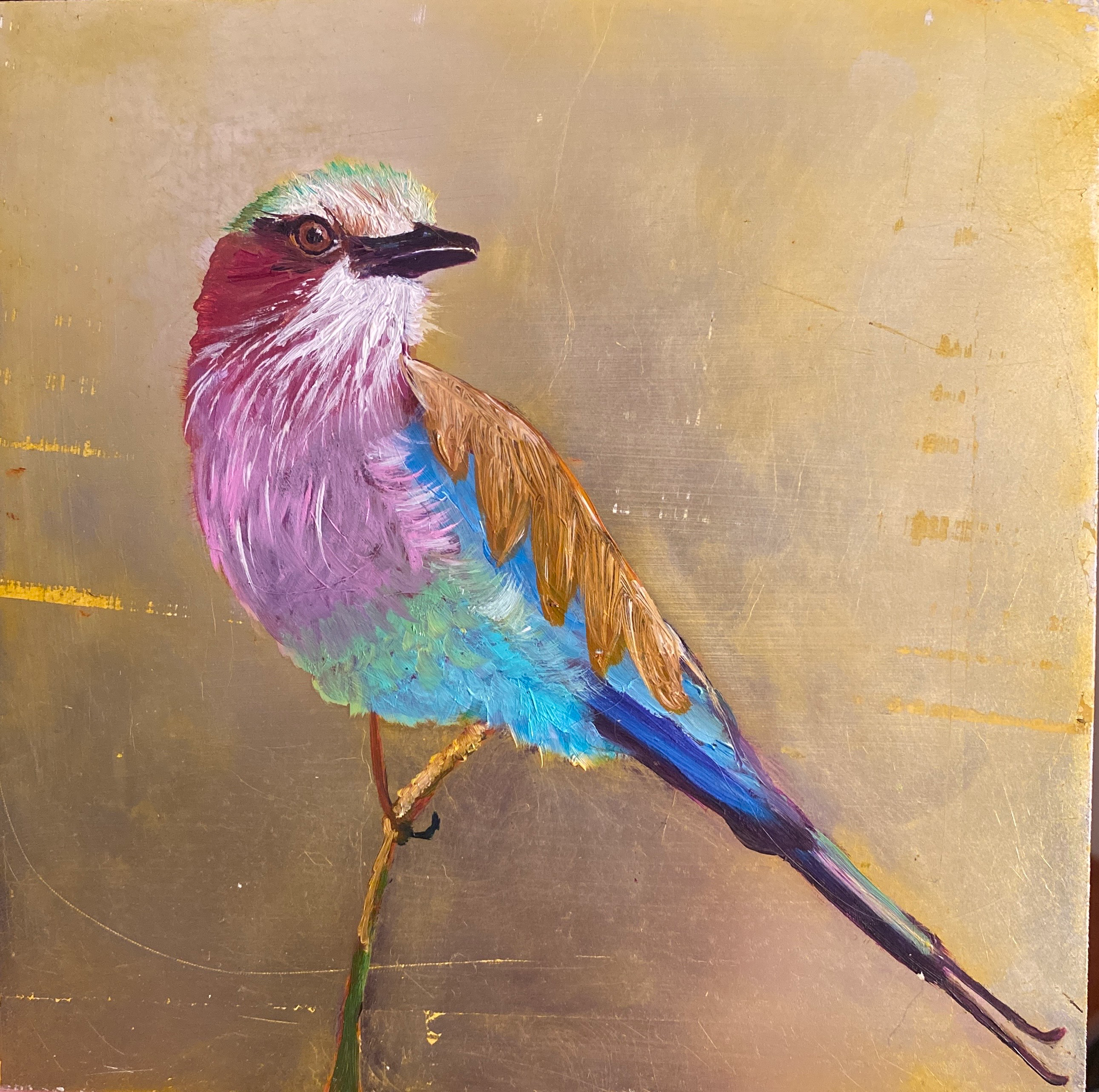
“I painted this as a reflection of what birds have always carried for me, quiet spiritual messengers, reminding us to listen to what’s stirring beneath the surface.”
Finding joy in the small things is not about forcing positive thoughts or pretending everything is beautiful. It is about gently redirecting attention toward what is actually being experienced, rather than what the mind is predicting or replaying. When awareness returns to the present, lived experience often reveals itself to be more nuanced, textured, and alive than our inner narratives suggest.
This is why small moments carry so much power.
The warmth of sunlight across your skin.
The rhythm of your breath when it settles.
A familiar sound, scent, or piece of music.
The quiet satisfaction of something simple and complete.
These moments are not insignificant. They subtly reshape the internal landscape. Research in neuroscience and psychology suggests that when attention rests on experiences that feel safe or pleasant, the nervous system shifts out of threat-based vigilance and toward regulation. Stress responses soften, the body relaxes its grip, and the mind becomes less reactive and more receptive. Over time, these micro-shifts influence how reality is perceived and emotionally experienced.
Thoughts shape our experience of reality not because they magically create outcomes, but because they shape interpretation. They determine what we notice, what we overlook, and how we inhabit each moment. When the mind is constantly projecting into the future or replaying the past, life can feel like something to manage. When attention returns to sensation and presence, life begins to feel like something to participate in.
This is where joy becomes a practice rather than an emotion.
Noticing small pleasures trains attention to stay with what is real and immediate, rather than what is imagined or feared. It teaches the nervous system that safety and ease are not abstract concepts, but lived experiences that can be accessed moment by moment. Over time, this shifts not only mood, but orientation. The world feels less adversarial and more relational.
There can be resistance to this at first. The mind may argue that focusing on small joys is naive, indulgent, or distracting from more important concerns. But attention is always shaping experience, whether consciously or not. Choosing where it rests is not avoidance. It is participation.
If you want to explore this in a simple, embodied way, begin with sensation.
Once a day, choose one sensory experience that feels neutral to pleasant and stay with it briefly, without analyzing it or trying to extract meaning from it. This might be the warmth of a mug in your hands, the sound of water running, the feeling of your feet on the floor, or the texture of fabric against your skin.
Remain with the sensation for twenty or thirty seconds, long enough for the nervous system to register it, and allow your breath to respond naturally. Nothing needs to be visualized or improved. You are not trying to change your thoughts. You are simply offering attention to what is already here.
That moment matters.
Over time, these small acts of presence accumulate, softening mental rigidity and creating more flexibility in how thoughts and emotions arise. Reality does not change because life becomes perfect, but because you are meeting it with more openness and less resistance.
In a culture that emphasizes control, productivity, and constant self-improvement, choosing to notice joy in ordinary moments becomes a quiet, radical act. It reminds the mind that it does not have to narrate everything, the body that it is allowed to rest, and the spirit that meaning is often found not in grand transformations, but in learning how to be fully here.